
Mumbai News : Bombay High Court Ends PCMC’s 37-Year Legal Battle; Upholds Property Tax Exemption for Lokmanya Medical Foundation
Mumbai News : Court rejects allegations of commercial exploitation, rules that nominal patient fees do not undermine a hospital’s charitable status; finds substantial evidence of public welfare activities

6 મિનિટ વાંચન
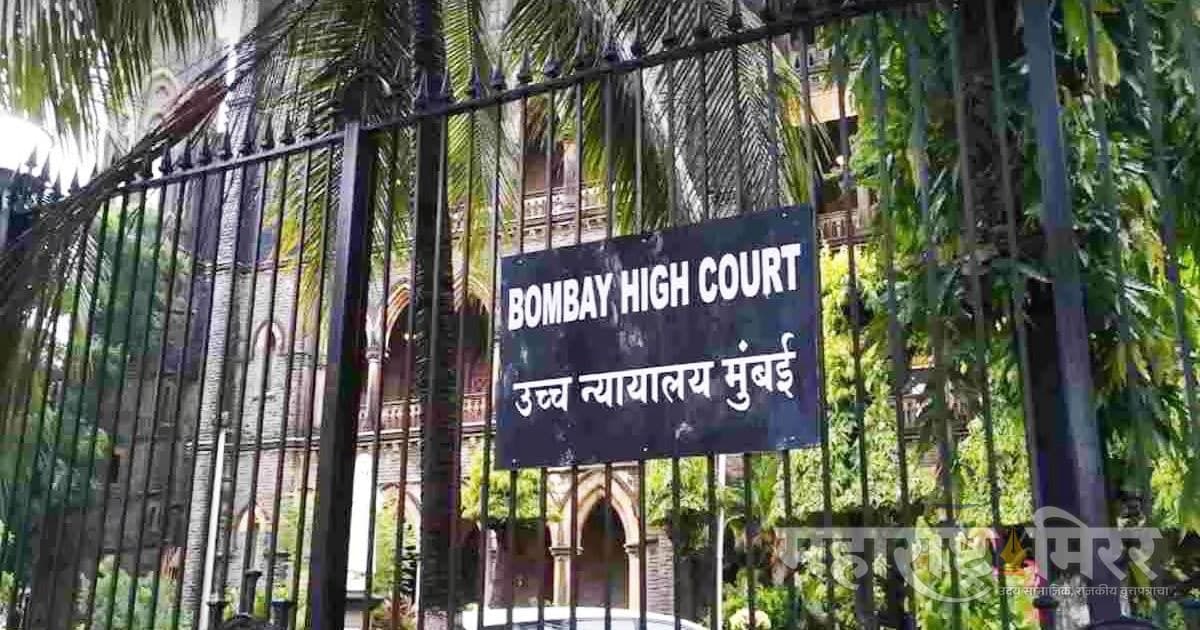
Mumbai News : In a significant legal victory for Lokmanya Medical Foundation, the Bombay High Court has dismissed a 37-year-old legal battle initiated by the Pimpri-Chinchwad Municipal Corporation (PCMC) over the property tax exemption granted to the charitable trust that runs the hospital. Rejecting the civic body's allegations that the hospital was exploiting its charitable status for commercial gains and tax evasion, the court upheld the foundation's exemption under Section 132(2) of the Bombay Provincial Municipal Corporations Act, 1949.
Justice Milind N. Jadhav, while dismissing Second Appeal No. 452 of 1989 on November 27, 2026, observed that the foundation was entitled to the exemption not merely because it was registered as a charitable trust, but because documentary and oral evidence established that it was genuinely undertaking charitable activities in accordance with its trust deed.
The court clarified that charging nominal fees for medical services, operating a medical shop or collecting patient charges does not automatically deprive a hospital of its charitable character.
The dispute dates back to September 4, 1982, when PCMC issued a tax demand notice seeking ₹22,082 from the trust. The demand comprised ₹11,860 towards house tax, ₹297 as fee tax, ₹7,920 towards education cess, ₹1,980 as surcharge and ₹5 towards notice charges.
Despite the trust seeking exemption, the corporation maintained that it did not qualify as a charitable institution and threatened recovery through attachment of hospital property. Under protest, the trust deposited ₹7,000 on March 21, 1983, followed by another ₹15,082 on March 25, 1983.
The foundation subsequently filed Special Civil Suit No. 410 of 1984, seeking a declaration of its charitable status and exemption from property tax under Section 132(2) of the BPMC Act.
The trial court dismissed the suit on March 27, 1987. However, the IV Additional District Judge, Pune, reversed the decision on February 10, 1989, granting the trust the exemption. PCMC subsequently challenged the appellate judgment before the High Court.
PCMC ALLEGES COMMERCIALISATION AND TAX EVASION
Appearing for PCMC, advocate Sandeep Shinde argued that registration as a charitable trust could not automatically entitle an institution to property tax exemption. He contended that the hospital was charging substantial fees from both indoor and outdoor patients and was functioning along commercial and profit-making lines.
The corporation argued that the first appellate court had failed to properly examine the hospital's activities and the evidence on record. It maintained that tax exemption could be granted only if the institution demonstrated that its operations were genuinely charitable rather than commercial.
PCMC also challenged the maintainability of the original civil suit, arguing that disputes relating to municipal taxation and assessment should have been raised before the appropriate forum under Section 406 read with Section 2(29) of the BPMC Act.
The corporation sought to set aside the 1989 appellate judgment and had also filed applications seeking a stay on its execution and directions requiring the trust to deposit property taxes, excluding general tax, and continue making payments during the appeal.
COURT FINDS SUBSTANTIAL EVIDENCE OF CHARITABLE ACTIVITIES
Rejecting the corporation's allegations, Justice Jadhav noted that the trust had produced witness testimony and extensive documentary evidence demonstrating its charitable activities. In contrast, PCMC failed to produce rebuttal evidence to substantiate its allegations of profiteering.
The judgment records that the foundation was providing medical relief and medical education to the public and had approximately 35,000 families of industrial workers attached to it. Under an arrangement, the government paid the trust only ₹5 per family annually, while the institution provided medical services to workers under the Employees' State Insurance Scheme.
The hospital's casualty centre handled approximately 500 to 600 emergency and accident cases every month. It also conducted government-recognised family welfare camps and centres free of charge, treating around 700 cases annually.
At the relevant time, the hospital had 60 beds, including 15 maternity beds reserved for free treatment. Medical assistance was also provided based on the income of patients' families, with different fee structures for different income groups.
The court further noted that the trust organised medical camps, operated government-recognised family planning centres, conducted exhibitions and lectures for medical education, and provided ambulance, X-ray and pathology services. Its ambulance service charged just ₹1 per kilometre.
The foundation's activities were supported through government grants, public donations and modest patient charges. Referring to the testimony of Dr. Vaidya, the court also noted that the hospital was operating at a loss.
'PCMC DID NOT EVEN ENTER THE WITNESS BOX'
A crucial factor in the High Court's decision was PCMC's failure to produce evidence supporting its allegations that the hospital charged exorbitant fees and operated as a commercial establishment.
The court observed that the trust had submitted its rate card, which demonstrated that only nominal charges were collected from patients. However, the corporation neither substantiated its allegations with supporting evidence nor rebutted the material placed on record by the trust.
The judgment specifically noted that the corporation had not even entered the witness box before the trial court to establish its allegations.
Justice Jadhav further observed that an appellate court cannot permit a party to introduce fresh evidence at the appellate stage merely to fill gaps in its case, particularly when it had failed to enter the witness box and challenge the opposing party's evidence before the trial court.
The court held that collecting some amount from patients or earning revenue through a medical shop does not, by itself, destroy the charitable character of an institution.
CIVIL SUIT HELD MAINTAINABLE; ALL THREE LEGAL QUESTIONS ANSWERED
Rejecting PCMC's objection under Section 406 of the BPMC Act, the High Court held that the trust had approached the civil court seeking a declaration of its charitable status and, consequently, its entitlement to property tax exemption. It had not raised a dispute concerning the payment or assessment of property tax itself. Therefore, the statutory bar under Section 406 was not applicable.
The court answered all three substantial questions of law framed in the second appeal in the affirmative. It held that the exemption was justified not merely on the basis of the trust's registration, but on the strength of evidence establishing that it carried out wholly charitable activities in accordance with its trust deed.
The court also upheld the maintainability of the civil suit and held that the first appellate court's decree was binding on the corporation.
Upholding the judgment dated February 10, 1989, the Bombay High Court dismissed PCMC's second appeal and disposed of the pending civil applications.
Advocate Sandeep Shinde appeared for PCMC, assisted by advocates Jayvardhan Hajare and Riddhi Gurav. No one appeared on behalf of the respondents when the matter was heard.
https://epaper.maharashtramirror.com/
hey, i am vikrant kulkarni news and video editor of maharashtra mirror news paper